RWB releases the Water Storage Status Report 2022-2023
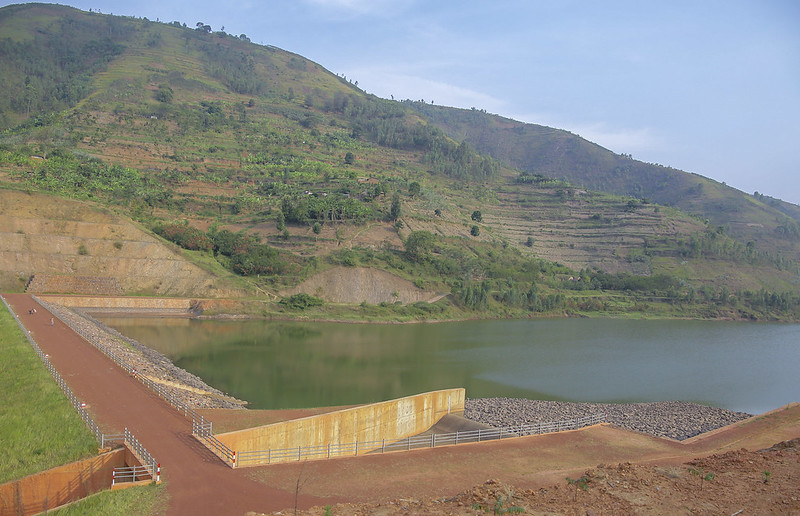
The Rwanda Water Resources Board (RWB) has issued the Water Storage Status Report for the year 2022-2023, providing a comprehensive account of accomplishments, ongoing projects, challenges and recommandations pertaining to water storage in Rwanda.
This report describes all national surface water storages which include natural and artificial water storages and underscores a need for more water storage infrastructures to support Rwandan farmers who rely on rain.
“The lack of storage infrastructure means farmers have limited ability to cope with droughts and floods. These limitations are estimated to cost the economy one-third of its growth potential. Investment in appropriate Water storage is an urgent option to increase agricultural productivity and to ensure that farmers have options for coping to the coming climate changes.” Report says
The annual water storage in Rwanda for the fiscal year 2022/2023 is estimated at 225.25 billion cubic meters.The Natural Storage makes 99.96% of the total storage while the Artificial Storage makes 0.04%.
The natural water storage in Rwanda, encompassing various lakes such as Kivu, Burera, Ruhondo, Muhazi, Rweru, Cyohoha, Sake, Kilimbi, Mirayi, Rumira, Kidogo, Mugesera, Nasho, Mpanga, Ihema, Mihindi, Rwampanga, and Cyambwe, is estimated to have a total capacity of 225.165 billion cubic meters
The artificial water storage facilities include water ponds storages mainly used for small scale irrigation, Valley dams for livestock watering and dams used for Irrigation, hydropower generation and domestic water supply.
Among the ongoing water storage projects are Nyabarongo II Multipurpose Dam, Muvumba Multipurpose Dam, Akanyaru Multipurpose Dam, Rusizi III Dam, Warufu Dam and Bakokwe Dam.
Challenges
- Reservoir sedimentation has become a significant problem within existing water storage infrastructures. Sediment deposition in reservoirs limits the active life of reservoirs by reducing reservoir storage capacity for irrigation, water supply, hydropower and flood risk reduction. Sedimentation also impacts dam outlets, water intakes, water quality, etc. This can be minimized by controlling erosion in the catchments areas of the dams;
- The lack of buffer zones is another issue observed in many existing dams. This is a big issue that need to be discussed at high level for water resources protection;
- Most of Irrigation dams are managed by local farmers with limited technical knowledge;
- Ponds lined with plastic sheeting are facing the issue of missing the sheeting for replacement;
- Valley dams need to be properly managed and rehabilitated
Recommendations
-
- Recognize, quantify and optimize all benefits and value created at reservoirs for all multi-purpose water users;
- To incorporate flexibility options for design and operation of reservoir to be able to adapt to the evolution of social & environmental requirements, climate change, etc.;
- Put in place state regulations on water storage development (dams and water structures are long term investments and highly capitalistic);
- Highlight the role of water storage for climate mitigation & adaptation;
- Address mitigation of sedimentation issue by involving different stakeholders;
- Customize water storage models to local context according to strong and best practices;