RWB and RFA Assess Progress of Congo Nile Divide Project
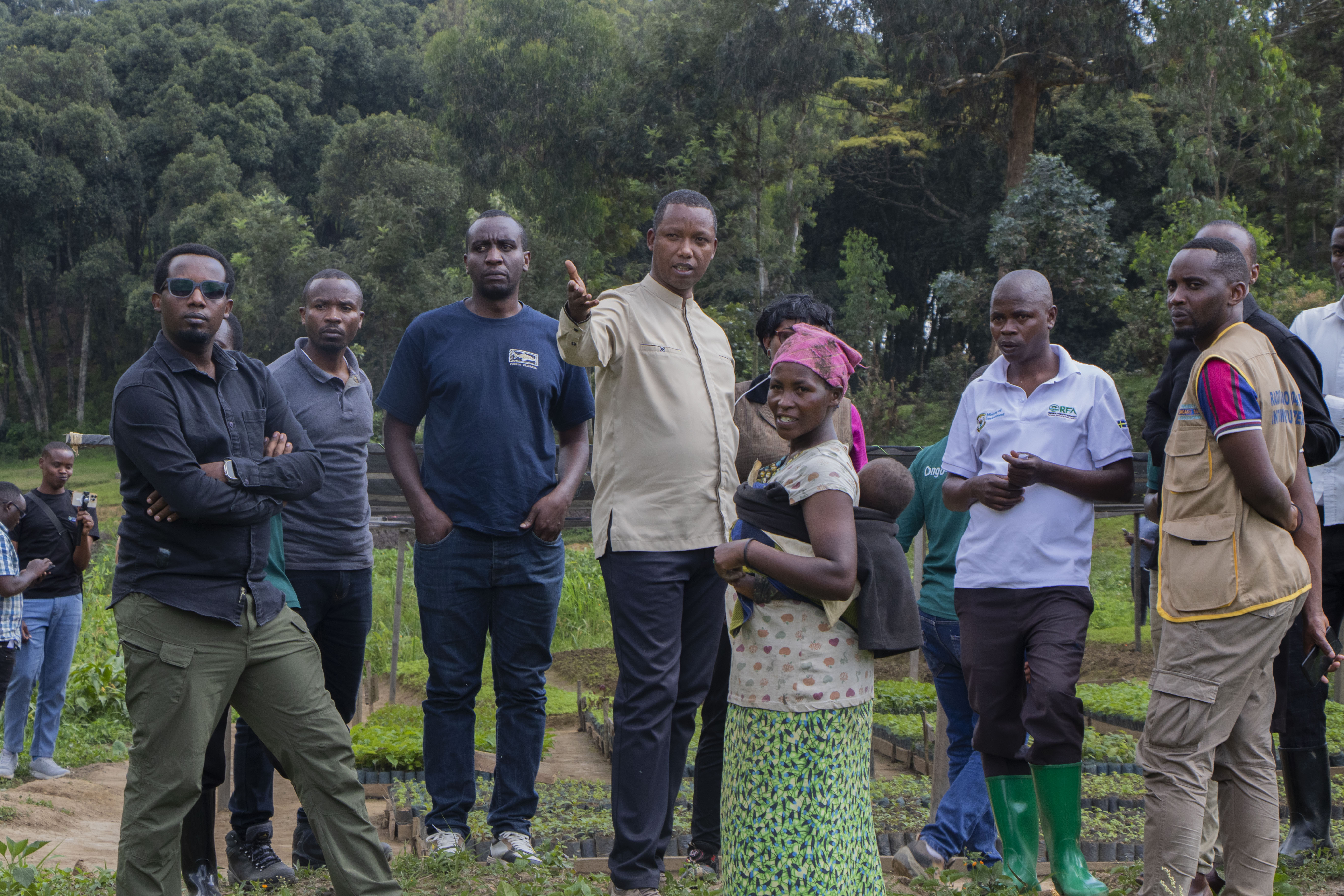
The senior leadership of the Rwanda Water Resources Board (RWB) and the Rwanda Forestry Authority (RFA) recently conducted a field visit to inspect the implementation of the Congo Nile Divide (CND) project. Spanning across Karongi and Rutsiro Districts, the visit served to assess current progress, address field-level challenges, and refine strategies to maximize the project’s impact on community climate resilience.
Funded by the Green Climate Fund (GCF), the project is a joint initiative being implemented by the RWB and RFA. The project’s core objective is “Building Resilience of Vulnerable Communities to Climate Variability in Rwanda’s Congo Nile Divide through Forest and Landscape Restoration.”
By stabilizing the fragile terrain of the Congo Nile Divide, the initiative aims to protect residents from environmental degradation while fostering sustainable, climate-responsive management of the region's natural resources.
Dr. Concorde Nsengumuremyi, Director General of the RFA, underscored the strategic importance of protecting this region as the Source of the Nile River.
“This area is the Source of the Nile. As you know, these waters flow all the way to Lake Victoria and beyond. The source requires meticulous protection. Given the steep, high mountains here, we must prioritize integrated landscape management.” He stated
During an inspection of the Musogoro Catchment, Dr. Emmanuel Rukundo, Director General of the RWB, highlighted how the project’s landscape interventions are successfully reversing soil degradation and boosting local economies. He emphasized that strategic infrastructure like terracing provides a permanent solution to the region's historical issues with erosion.
“Radical terraces are vital for capturing rainwater and forcing it to soak into the ground rather than allowing it to wash away the fertile topsoil. Beyond environmental protection, these terraces significantly boost productivity; we have seen examples where potato yields increased from 3–5 tons per hectare to between 15 and 20 tons after terracing, a four-to-fivefold increase,” Dr. Rukundo stated.
The leadership of Karongi District also emphasized the dual benefits of environmental restoration and poverty reduction. Mayor Muzungu Gerald highlighted that the project is a vital intervention for both the health of the local ecosystem and the financial stability.
“The project is essential for the health of this catchment. By protecting the soil and indigenous trees, we ensure a more stable climate for our people. Furthermore, it creates much-needed jobs; residents earn an income while making their land more fertile, leading to greater food security and increased household income,” Mayor Muzungu Gerald stated.
Across Karongi and Rutsiro, RWB will implement restoration activities including the construction of 1,200 hectares of radical terraces and 473 hectares of progressive terraces. These works, which include rehabilitating 39 kilometers of gullies and 300 hectares of riverbanks, will create employment for over 3,500 residents, ensuring the project delivers both environmental protection and immediate socio-economic support.