RWB and AfDB Launch $9 Million Project to Strengthen Flood Resilience in Western Province
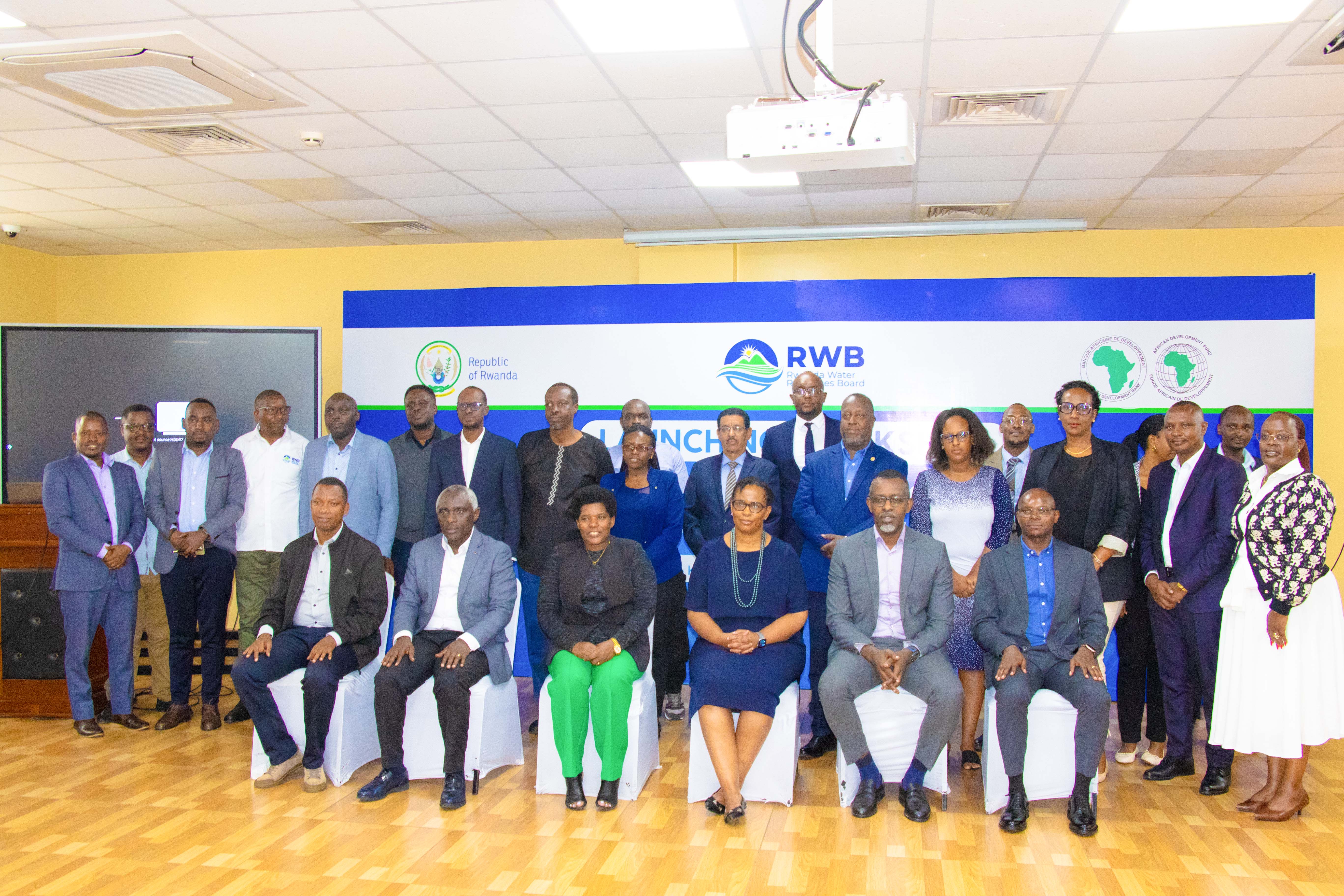
KIGALI, February 18, 2026: The Government of Rwanda through the Rwanda Water Resources Board (RWB) and the African Development Bank Group (AfDB), have launched a $9 million grant project to bolster flood resilience in Western Rwanda.
Financed by the African Development Fund, the initiative, titled “Nature-Based Flood Adaptation to Increase Community Resilience in the Western Part of Rwanda,” will deploy ecosystem-based solutions; including riverbank stabilization and reforestation, to protect high-risk watersheds in flood-prone districts.
Speaking at the launch, Ms. Aissa Toure Sarr, AfDB Country Manager for Rwanda, emphasized the project's dual focus on safety and economics. “Climate-related disasters continue to pose serious risks to communities in Western Rwanda. Through this investment, AfDB is supporting sustainable, nature-based solutions that not only reduce flood risks but also strengthen livelihoods, enhance environmental protection, and create local employment opportunities,” she stated.
As the lead executing agency, the Rwanda Water Resources Board (RWB) will spearhead the restoration works in close coordination with local authorities. Eng. Richard Nyirishema, Executive Chairperson of RWB, highlighted the long-term impact on the nation’s resources. “This project represents a significant milestone in our national commitment to safeguarding vulnerable communities from the escalating impacts of climate change. By prioritizing nature-based solutions, we are strengthening resilience across high-risk catchment areas while protecting critical infrastructure, agricultural livelihoods, and the long-term sustainability of our water resources,” he noted.
Representing the provincial government, Uwambajemariya Florence, Executive Secretary of the Western Province, pledged full support for the strategic intervention in Karongi and Rusizi. “This project represents a strategic intervention designed to safeguard our communities, enhance climate resilience, and equip them with the necessary resources to mitigate the effects of natural disasters. Our teams have worked closely with local residents to ensure they are prepared and ready to contribute to the project’s success,” she said.
To achieve these goals, the project will implement nature-based measures such as vegetated check dams, green embankments, and gully rehabilitation across hotspots in Rusizi and Karongi, alongside extensive terracing and agroforestry to benefit over 600,000 people. Furthermore, the initiative will modernize flood forecasting by installing six hydrometric stations and early warning systems to serve 1.2 million residents while providing specialized training for disaster response teams, local officials, and TVET students.