KWIBUKA 31: STAFF URGED TO FIGHT AGAINST GENOCIDE IDEOLOGY
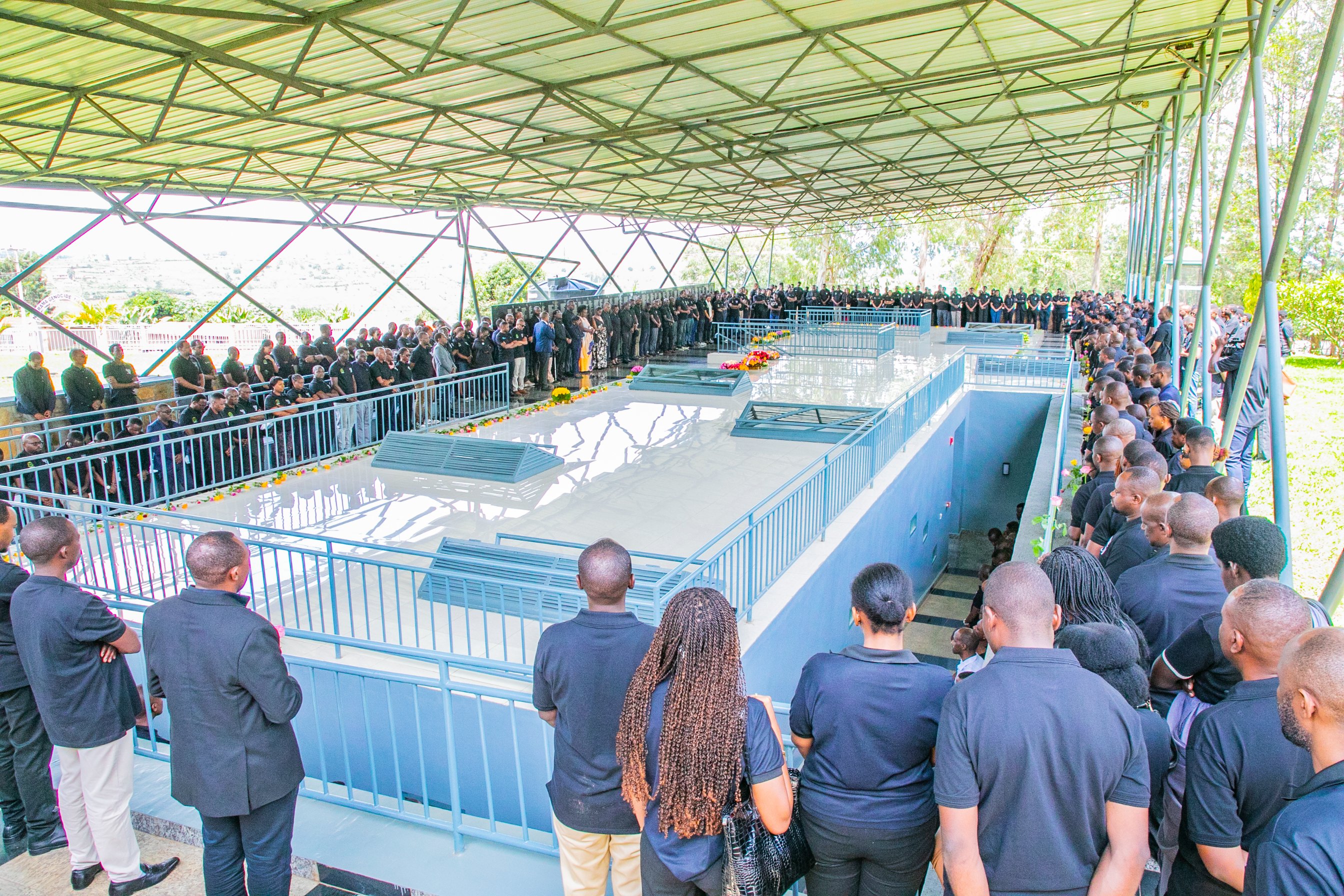
May 16, 2025 – The management and staff of the Rwanda Water Resources Board (RWB) joined other institutions based at Nyarugenge Pension Plaza in commemorating the 1994 Genocide against the Tutsi. The event took place at Ntarama Genocide Memorial in Bugesera District, the ceremony honored the memory of over 5,000 victims laid to rest there.
The ceremony began with a solemn tour of the Ntarama Genocide Memorial, where over 500 staff form Ministry of ICT and Innovation, Ministry of Environment, Ministry of Emergency, National Land Authority, Rwanda Water Resources Board and Rwanda Meteorology Agency, learned how Tutsis who sought refuge in the former Catholic church were tragically massacred at the very site they hoped would offer safety.
Delivering a keynote message, Mr. Charles Habonimana, Managing Director of Rwanda Airports Company, expressed concern over recent studies showing that over 60% of genocide ideology cases are found among youth born after 1994.
“This is the consequence of older generations poisoning the minds of the young with ethnic divisions,” he warned. “Let’s choose to leave behind a united and peaceful Rwanda. Let’s be the last generation that knows of ethnic labels.”
In his address, Minister of Emergence Management, Hon. Maj Gen (Rtd) Albert Murasira emphasized that remembrance is not only about reflecting on the tragic past, but also about taking responsibility to ensure a more united and just future.
“When we gather to remember, it is a moment to reflect on the horrors of the Genocide and to strengthen our resolve to uproot genocide ideology,” he said.
“Many of those who planned and carried out the Genocide were public servants, individuals who instead of protecting their fellow citizens, turned against them. This was a sign of poor leadership and lack of moral judgment.”
He urged all leaders and staff present to use their roles to promote unity and actively resist any forms of discrimination or divisionism.
“As public servants today, we must stand together, advocate for what is right, and take a firm stand against all forms of genocide ideology, denial, and revisionism,” he added.
The commemoration concluded with a strong call for institutional responsibility in safeguarding memory. By coming together, these institutions reaffirmed their shared commitment to preserving historical truth, promoting unity, and fighting genocide ideology in all its forms, ensuring that the genocide never happen again.